In simple terms, being overweight will impact your pet’s health. Obesity increases the risk of health problems and can shorten your pet’s life. It is an incredibly common for us to see overweight dogs, but it can be prevented and rectified.
How can I tell if my dog is overweight?
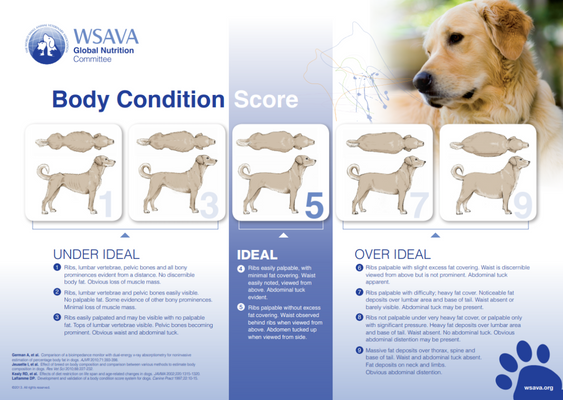
A ‘body condition score’ (BCS) is how veterinary professionals gauge if a dog is under or overweight. We are often asked “how much should my dog weigh?” With so many different breeds, cross breeds and body types in dogs, it can be a difficult question to answer so their body condition score helps to guide this. To determine their BCS, we need to asses how a dog looks and feels in order to say whether they need to lose weight, gain weight or are at an ideal weight for their body type. Owners can do the same at home using a guide:
Your dog’s behaviour may also change if they are overweight. They may be reluctant to go for a walk or lag behind sometimes. You may see them panting more during mild exercise and they may seem more tired than they usually did. They may be less willing to jump onto the sofa or bed for cuddles, or more reluctant to walk upstairs.
Risks associated with obesity
- Breathing problems (particularly in brachycephalic breeds)
- Diabetes Mellitus
- Urinary bladder stones
- Urinary incontinence
- Arthritis due to increased pressure/weight on the joints
- Increased risk of certain cancers
- Heart disease
- Hypertension (high blood pressure)
- Anaesthetic complications
- Skin diseases
- Heatstroke
- Reduced lifespan
What leads to obesity?
Overfeeding and a lack of exercise will ultimately mean your dog puts on unwanted weight. Older dogs or those with mobility issues will be more prone to putting on weight as they become less active. There may be some weight gain post-neutering though this is easily managed with correct diet and exercise. Certain conditions of the thyroid can lead to weight gain if left untreated; speak to your vet if you notice a change in weight or appetite.
How to prevent and treat obesity
Losing weight should be done gradually towards a stable and healthy maintenance weight.
1. Measure out their food
An overfilled cup or scoop can add a lot of calories, especially for smaller dogs. Use a kitchen scale to ensure you are feeding your dog the precise recommended amount each day. Most dog food will include a feeding guide based on your dog’s weight though the weight bands are usually quite broad, you may need to reduce the suggested amount slightly dependant on your dog’s weight. Speak to one of our vet nurses about a nutritional assessment for your dog in order to get a more detailed idea of how much and what to feed.
2. Avoid fatty meats
Feed lean meats such as turkey, lean beef and chicken rather than higher fat duck , pork or processed products like sausages. Remember that these meats are not a complete diet, as they do not contain all the nutrients your pet needs to live; ensure that you have got them on a complete diet by speaking to a member of our team regarding their nutrition.
3. Moderate their treats
Treats are a fun way to reward our pets and a great aid when training; as long as you’re feeding low fat, healthy treats in moderation you don’t need to cut these out altogether. Look for treats which are 100% meat with no additives or extras. Carrot sticks are a great crunchy alternative to traditional treats and lean cooked chicken is a great option instead of fat-filled sausage treats.
Consider your dog’s dinner; if you’ve given them a lot of treats through the day, cut down their evening meal accordingly. If your dog is fed dry food you can weigh out their daily allowance in the morning and use this as their “treats” throughout the day.
4. Cut out the scraps
Table scraps and leftovers will be high in fat, sugar and salt and are definitively not fit-dog friendly! It is best practice to avoid ever giving any human food as there may be some foods that contain toxic ingredients (such as onions, leeks, xylitol), while others will cause stomach upset, vomiting and diarrhoea.
5. Choose a the right diet
Start by reducing your dog’s current food intake if they are already enjoying a good quality complete diet. You can also speak to your vet about prescription diets which can aid with weight loss. These diets are designed to be high in protein and fibre whilst being low in fat, keeping your dog full and energised.
6. Up the exercise
Take longer walks or add in some fetch games to get your dog more active daily. If you can’t get out to do as much exercise because of the weather, try some fun indoor games. Remember adjust your dog’s food allowance accordingly if they aren’t getting as much exercise in the winter or if they are suffering from conditions, such as arthritis, which can affect how much exercise they can manage.
7. Regular vet visits and weigh-ins
If you are worried about your dog’s weight, speak to your vet, they can help you find the right weight management plan for your dog. Whilst on a weight loss journey, weigh your dog every 2-3 weeks so you can keep track of their progress.
Call us on 01435 864422 to speak to one of our team about your pet’s nutrition.
Heathfield Vets – Quality Care With A Friendly Face