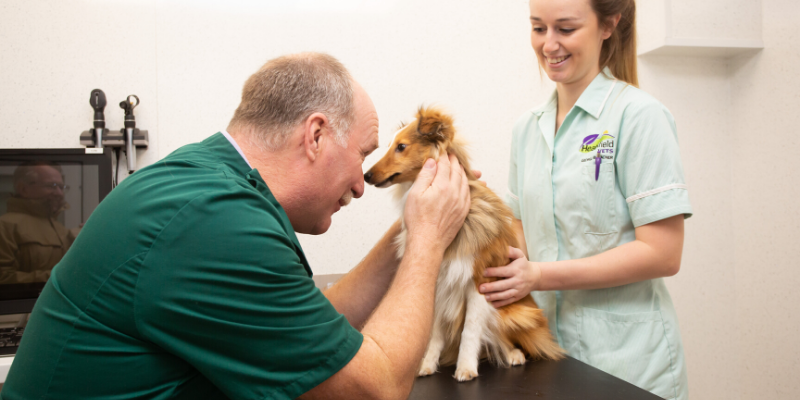
 If your dog is scared or anxious when coming to visit us at the vets, they are more than welcome to come along to the practice between 1-2pm when things are quiet to build their confidence. It’s a good chance to have a sniff, meet some of the team if they are ready for that, and get some tasty treats and fusses. We recommend starting slowly and keeping visits short until they are less anxious, rewarding them with praise and lots of treats so they begin to see the whole vet experience in a more positive light. Please do give us a call in advance if you plan on coming along, just in case we have any puppy classes, meetings or extra consultations planned that day.
We recommend bringing with lots of your pet’s favourite treats, or a toy they love if they aren’t motivated by food. Cutting their treats into small pieces will mean you can give more of them, just remember you might need to give them a smaller breakfast or dinner to account for the extra calories they’re taking in via treats.
Step 1 – The car park
If your dog starts to shake as soon as you pull up to the sign outside, bring them up for a simple trot around the car park without even entering the building. This gives them a chance to sniff, explore and be rewarded with treats and praise, with nothing scary happening. You may need to repeat this a few times until they are more comfortable with arrival and ready to walk in the door. If you live nearby, please feel free to make a stop in our car park part of your daily dog walks!
Step 2 – The waiting room
Come on in to the waiting room when your dog is ready for the next step, they can meet our reception or nursing team (who can also offer treats and fusses) and explore with less people or pets around. It’s a good chance to get them used to stepping on the scales without the pressure of needing to get an accurate weight. Again, this is a marathon, not a sprint, it can take a while until some dogs feel less anxious.
Step 3 – A consult room
Once your dog is feeling happier and more confident in the waiting room, they can explore a consultation room. Gradually working up to being placed on an examination table (if they are small enough!).
Step 4 – Handling
This is something you can practice at home, getting your dog used to having their ears, face, and feet touched. Remember to reward with lots of praise and offer treats. We also recommend muzzle training, even if your dog has never shown any signs of aggression. If your dog is injured, scared and in pain, they may need to be muzzled and prior training to make this a positive experience will help reduce anxiety.
If a member of our nursing team is available when you visit, they would be happy to carry out some basic handling in a consult room.
Step 5 – Meet a vet!
Some dogs have the fear of a green coat and can be fine until the person with the stethoscope and thermometer turns up! If one of our vets is available, they would be happy to meet your dog without any pressure of an examination, give them a fuss, offer some treats or play with a toy for a few minutes.
Call us on 01435 864422 if you would like to bring your dog along to a confidence clinic.