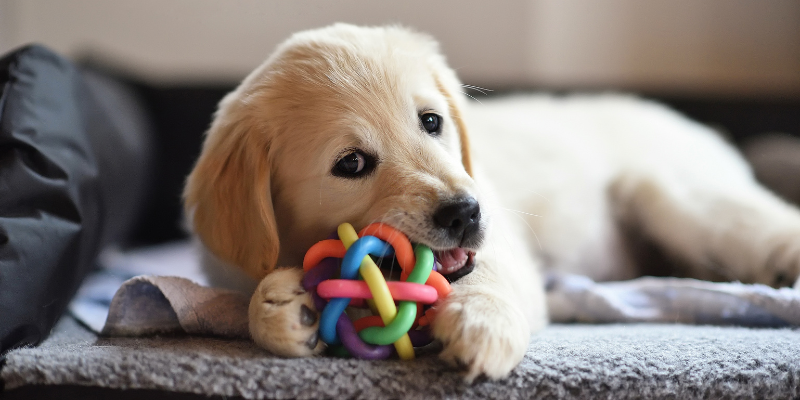
Puppies are born without any teeth; their tiny, sharp baby teeth (also known as deciduous teeth) begin to appear at 3-4 weeks of age and by 8 weeks they should have a full set of 28 baby teeth in place. These teeth begin to fall out at around 3 months of age and the adult teeth begin to emerge. This stage can be difficult for both your puppy and you! The process can be painful for your pup and may lead to some unwanted behaviours, like nipping and chewing furniture. By 6-7 months of age your puppy should have a full set of 42 adult teeth.
Signs of a teething puppy
- Red or inflamed gums
- Missing teeth (you may even find some around the house)
- Bleeding gums (you may notice blood on toys)
- Chewing and biting
- Bad breath
- Reduced appetite
- Drooling
- Grumpiness
Helping a teething puppy
It’s hard to watch our pets in discomfort but there are some things you can do to provide some relief for your pup from teething. Remember to always supervise your puppy with any chews or toys and consider moving any prime puppy biting targets, like electrical cords, shoes and clothes.
Provide some chew toys
There are lots of puppy safe chew toys out there which are designed to be softer for their mouths whilst massaging their gums and relieving discomfort. We particularly like the Kong puppy chew treat toy.
Keep it cool
A frozen wet tea towel or washcloth can provide your pup with some much needed relief. Some toys are designed to be placed in the freezer too.
Adapt the snacks
Not all treats or dental chews are appropriate for puppies as they are too hard; make sure to check treats are suitable for puppies under 6 months before giving them to your dog. Frozen carrot sticks make a nice treat for teething pups, never give puppies ice cubes as these are too tough for them.
Puppy biting and chewing
Not all puppy nipping or chewing is due to teething, they may also do it our of boredom, over-tiredness or simply because using their mouths is how pups explore their environment. If your puppy is nipping at hands or chewing on furniture, redirect them to a toy and give them lots of positive reinforcement. It’s important your pup learns what they are allowed to chew and what they aren’t without negative reinforcement – redirection will work better long term. It can also help to make sure your puppy is getting enough sleep; 16-18 hours are recommended, and less can make them more prone to being overtired and exacerbating any nipping they might do.
Retained teeth
Some dogs can have deciduous teeth which do not fall out; these retained teeth can lead to serious dental issues if they are not removed. You may be able to see signs of retained teeth yourself or your vet or nurse may point them out at your puppy’s vaccination or 6 month health check.
Keeping adult teeth healthy
The best way to keep your puppy’s new adult teeth healthy is daily brushing with a pet safe toothpaste. Start off slow with your pup by introducing them to the toothpaste on your finger and gradually build up to using a toothbrush. You can also add in some supplementary powders or water additives designed to reduce plaque and create a healthy mouth. Having your pet’s teeth checked at their annual vet check up will help identify any signs of dental disease early.
Call us on 01435 864422 if you have any questions about your puppy’s dental health.