We want our patients to have a positive experience when they visit us, free of stress, anxiety and frustration. Cats are very susceptible to these emotions, but by working with owners we hope to create a cat-friendly visit from start to finish.
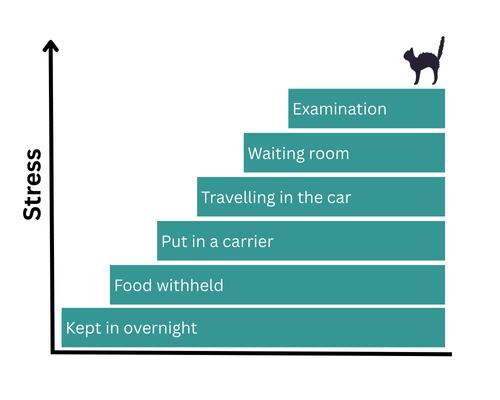 Stress points for cats can begin long before their visit to the consultation room. From bring kept indoors over night to a trip to in the car, these stressors can be cumulative, increasing their stress level by the time they reach the veterinary surgeon. While some stressors are unavoidable due to necessity or practicality, there are steps we can take to lessen the impact for cats.
Withholding food
If your cat needs a blood test or a general anaesthetic, they will need to be starved for 12 hours. We try to book blood test appointments for 9am, our earliest slot, so patients don’t need to go too long without breakfast. If you have an outdoor cat, they will need to be kept in overnight so they don’t find their own meal in the garden! Try to give your cat some food just before 9pm the night before, so they don’t go too long without a meal.
The carrier
Familiarising your cat with their carrier at home will make vet appointments much easier. Ideally, the carrier should always be left out in a room they enjoy and they should be encouraged to explore it with treats and toys. Learn more about getting your cat used to their carrier here.
Carrying a carrier
Cats don’t need to feel like they’re in a wobbly gondola so hold the carrier close to your body, with a hand on the bottom.
The car
As with the carrier, familiarising your cat with your car is key. You may need to start very slowly with just a short 2 minute trip and work your way up to a full drive to the vets. Carriers should be placed in the footwell or in the backseat and secured with a seatbelt. Try to avoid strong smells and loud noises in the car, you can even try some cat specific calming music! It’s not unusual for cats to get car sick or have an accident in their carrier so make sure it is lined with some absorbent material.
The waiting room
At Heathfield Vets we have a separate cat waiting room so cats are not disturbed by noisy dogs and the general hustle and bustle of reception. We also have a counter surface where carriers can be placed, as being off ground level can help cats feel more secure and less vulnerable. We recommend covering your cat’s carrier with a blanket, which are available in our waiting area; this will lessen sounds and smells as well as preventing cats catching sight of other patients and feeling threatened. Our blankets are spritzed with Pet Remedy or Feliway, calming pet pheromone sprays which have been found to reduce stress.
The consultation room
Now comes the main event! Possibly the most stressful part of your cat’s visit where they will need to be examined and potentially have procedures performed, such as blood sampling. Our veterinary team endeavour to make cats as comfortable as possible, allowing them to exit their carrier and explore their new surroundings before we start. If a patient is reluctant to leave the safety of their carrier, a version which allows the top to be removed is a huge help, as this allows vets to examine the cat whilst in the carrier where they feel safe. Blankets are helpful in the exam room too, they can be placed on the examination table to provide a comforting surface for the examination to take place.
Handling
We use gentle handling with our feline patients, without the use of muzzles, scruffing or full body restraint. Where we are unable to examine a patient or perform a procedure, we advocate the use of calming medication which can be administered prior to the appointment. The medication we use for cats is prescription strength anti-anxiety medication which works to supress overly stimulated neurons in the brain that cause anxiety. The use of this is becoming more and more common in the veterinary industry and has shown incredible results, particularly in cats.
Hospitalisation
If your cat does need to stay with us in the hospital, our kennels are designed to be cat friendly. Cats enjoy larger sized cages with ‘cat castles’ which allow them to perch and hide, behaviours which can reduce stress. We also provide warm blankets to help them feel cosy. All of our cages are forward facing so cats won’t have any other patients in their line of sight. We also use blankets and towels over the front of cages to provide a sense of security for cats.
Call us on 01435 864422 if you have any questions about how to make your cat’s experience less stressful.