Heathfield Vets

Quality Care With A Friendly Face

01435 864422

Heathfield East Sussex TN21 8AD

01435 864422

Heathfield East Sussex TN21 8AD

  • Home
  • Your Vets
    • Meet the Team
    • Testimonials
    • About Heathfield Vets
    • Careers and Vacancies
  • Your Pets
    • Repeat Prescriptions and Food
    • Register Online
    • Pay Online
    • Platinum Pet Club
    • Insurance Claims
    • Pet Travel
    • Pet Advice Centre
    • Symptom Checker
    • Poisons Guide
    • Our Prices
  • Book Now
  • Emergencies
  • Services
    • Dental Care
    • Endoscopy
    • Laparoscopic (Keyhole) Spay
    • Laboratory testing
    • Laser Therapy
    • Neutering
    • Nurse Clinics
    • Orthopaedic Surgery
    • Ultrasonography
    • Vaccinations
    • Phovia Light Therapy
    • Pet Travel
    • Insurance
  • News
  • Contact

Adder bites

17/03/2026 By Heathfield Vets

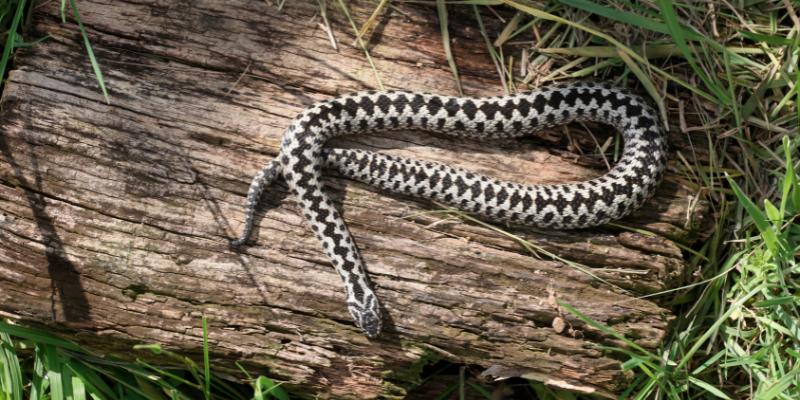
Adders (Vipera berus) are the UK’s only venomous snake. Despite their reputation, they are shy little reptiles that like to hide away when approached.  Most bites occur when they are accidentally disturbed or stepped on.

What does an adder look like?

Male adders are a silver-grey, whilst the females are a more copper-brown tone. Both have the distinct black zig-zag marking down their backs and a V or X shaped marking on the back of the head. A less common melanistic (all-black) variant also exists, which is all black, often with red eyes. Fully grown, they can reach around 60-80cm.

Where do adders live?

Adders are commonly found at the edge of woodland, moorland, heathland, sand dunes and on rocky hillsides.  They are found throughout the UK and are common in East Sussex thanks to our wonderful countryside and coastline.

When are adders most active?

Adders hibernate from October to March, they begin to emerge in spring and spend their mornings basking in sunny patches.  They are sensitive to vibrations and will retreat at the approach of footsteps.

How dangerous are they to pets?

Adders may bite if disturbed or stepped on by a curious dog. Their venom is intended to kill small mammals like mice and voles, bites can be incredibly painful for humans and may be fatal to dogs or cats.

What are the signs of an adder bite?

Bites are most likely to occur on your pet’s feet and face and can appear as a dark coloured wound, in some cases you may see two small puncture marks.  You may also see rapid swelling in the area and bruising. Other less obvious symptoms can include:

  • Lameness
  • Vomiting
  • Pale gums
  • Dehydration
  • Depression and lethargy
  • Collapse

What to do if you pet is bitten

  • Keep your cool, your pet needs to be as calm as possible.
  • Call your vet and let them know you are on your way.
  • Carry your pet if possible to keep their heart rate low.
  • Bathe the wound in cold water to soothe pain.
  • Do not tourniquet the wound.
  • Do not approach the snake.
  • Warn others of the danger if you can.

How to avoid an adder bite

If you are heading into an area where adders may be, keep your dog on a lead.  Avoid long grass and rocky areas and stick to the pathways.

Some interesting adder facts

  • Adders are a protected species, it is illegal to harm them.
  • They give birth to live young! About 20 or so in late summer.
  • They live for around 8-10 years.
  • If you do spot an adder, you can record your sighting at The Record Pool which collects data on the UK’s amphibians and reptiles.

Call us on 01435 864422 if you are worried your pet may have been bitten by an adder.

Heathfield Vets – Quality Care With A Friendly Face

Filed Under: News

Pet Advice Centre

Pet Advice – Dogs

Pet Advice – Cats

Pet Advice – Rabbits

Pet Advice – Ferrets

Pet Advice – Chickens

Practice Information

Recent blogs

Adder bites

What to do if your pet goes missing

Cat bite abscesses

Changes to the Leptospirosis vaccine

The 2025 pet Christmas gift guide

Puppy teething

Our response to the Competitions and Market Authority report

What does it mean to be RCVS accredited?

Setting up a hamster home

Cat Litter Tray Tips

Keeping your pets safe in autumn

Choosing the right pet food

Behavioural issues in dogs

New strain of Rabbit Viral Haemorrhagic Disease 2

Heathfield Vets wins ‘Best in County’ 2025

Choosing holiday care for your pet

How to choose a dog walker: A guide for pet parents

Referrals

Responsible of use of anti-parasitics

Creating a cat friendly vet visit

Heathfield vets - rcvs-accredited-practice-logo

Full emergency service 8.30 am to 7 pm weekdays and 8.30 am to noon on Saturdays
for all pets under our care

Plus emergency cover with VetsNow

Contact

      • 01435 864 422
    • vets@heathfieldvets.co.uk
    • Facebook
    • Chimneys
      Hailsham Road, Heathfield
      East Sussex, TN21 8AD

Opening Hours

Appointments
Mon-Fri 9.00am – 12.15pm
2.00pm – 6.00pm
Sat 9.00am – 11.15am
Reception
Mon-Fri 8.30am – 6.00pm
Sat 8.30am – 11.30am

Copyright © 2026 Heathfield Vets Ltd | Privacy policy | Cookies policy |Terms of use | Terms of business | Online portal

Scroll Up
MENU
  • Home
  • Your Vets
    • Meet the Team
    • Testimonials
    • About Heathfield Vets
    • Careers and Vacancies
  • Your Pets
    • Repeat Prescriptions and Food
    • Register Online
    • Pay Online
    • Platinum Pet Club
    • Insurance Claims
    • Pet Travel
    • Pet Advice Centre
    • Symptom Checker
    • Poisons Guide
    • Our Prices
  • Book Now
  • Emergencies
  • Services
    • Dental Care
    • Endoscopy
    • Laparoscopic (Keyhole) Spay
    • Laboratory testing
    • Laser Therapy
    • Neutering
    • Nurse Clinics
    • Orthopaedic Surgery
    • Ultrasonography
    • Vaccinations
    • Phovia Light Therapy
    • Pet Travel
    • Insurance
  • News
  • Contact